
Build the system into your property.
Heating equipment and controls, utility connections, paving, site preparation and drainage all belong in the scope.
See what shapes installation costA practical plan for a better winter
Start with the areas you want to keep clear. Understand what shapes the installation and running costs. Then get an estimate built around your property.
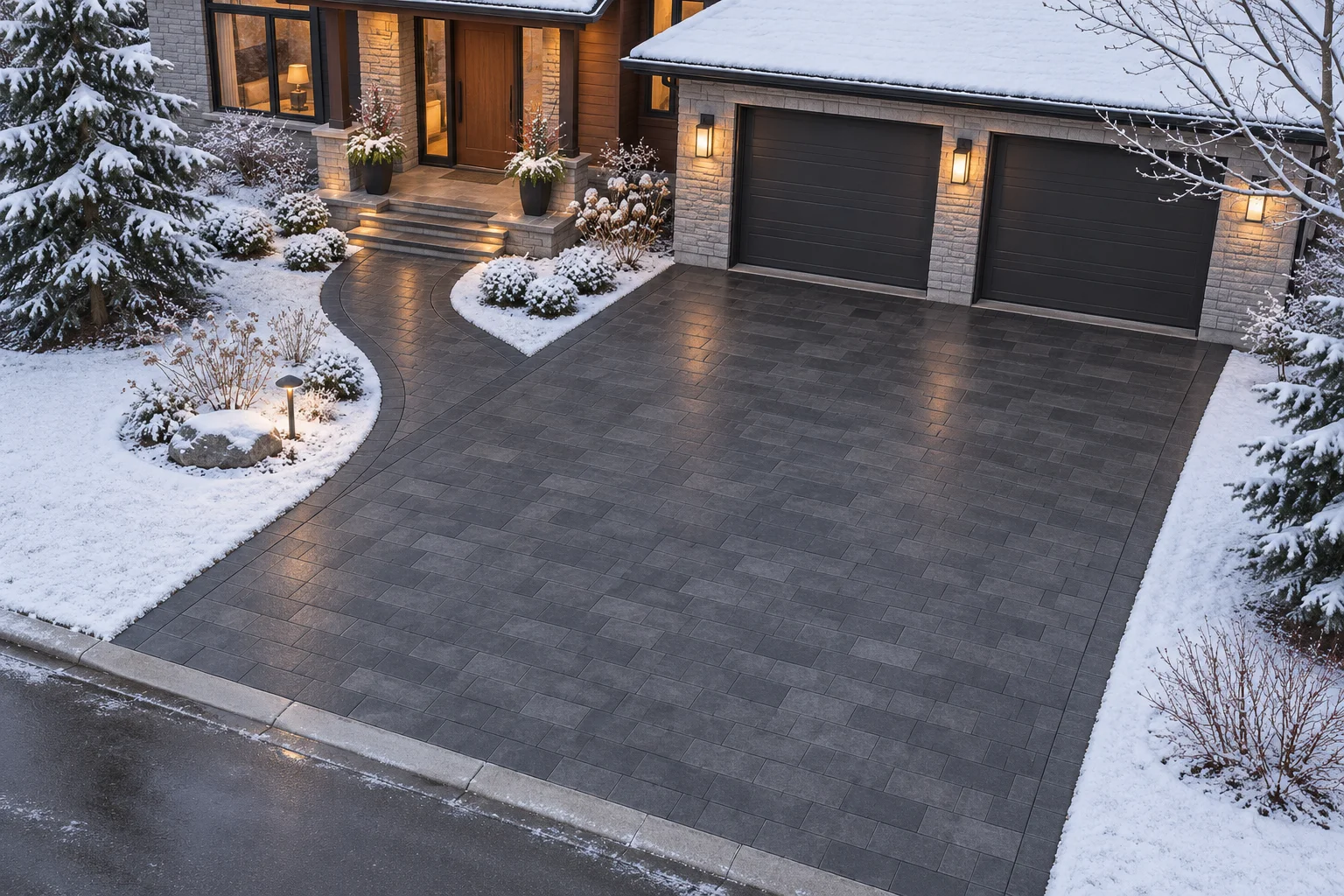
Start with two separate budgets
Understanding both helps you compare options. A single equipment price or square-foot rate does not describe the whole project.
Heating equipment and controls, utility connections, paving, site preparation and drainage all belong in the scope.
See what shapes installation costEnergy use varies with the heated area, weather, system design and settings. Include upkeep and equipment maintenance.
Understand running costsThe choice that starts the conversation
Select an option to see the heated area. Less coverage changes the result as well as the amount of heating material required.
Conceptual coverage only. Your layout, dimensions, heating capacity and drainage are confirmed for the selected system.
Smaller coverage can reduce heating material and energy use. Fixed installation work still matters, so price does not scale directly with area.
Help me choose my coverageSelected illustration: full driveway heating.
What goes into the installation
A useful estimate starts with a clear scope. These factors show what needs to be assessed before putting a number against the work.
Total area, irregular shapes, steps and the zones you choose affect the heating layout and materials.
Concrete, asphalt and interlock require different installation details. New work and retrofits have different scopes.
Electric service capacity or a suitable hydronic heat source, equipment location and connection distances need checking.
Electric cable or mats, or hydronic tubing, pumps and heat-source equipment, form different system packages.
Sensor placement, automatic control, zones and any optional remote access affect equipment and installation.
Removal, excavation, base preparation, grading, drainage and reinstatement can be substantial parts of the project.
Ask whether paving removal and replacement, utility upgrades, controls, drainage, permits or inspections, testing, commissioning and taxes are included or excluded.
Electric or hydronic?
Neither is automatically the lower-cost option. Available utilities, construction and expected use shape the recommendation.
Make the running-cost conversation concrete
There is no assumed electricity rate, system size or winter run time here. Enter your own scenario to see how the energy charge is calculated.
Electric systems only
Use the heating load from a system design, a heating duration and your electricity rate. This calculates the energy charge for those inputs, not an installation quote or winter forecast.
Use the heating system’s load, not the electrical panel rating.
Count hours actually heating at the entered load, including any finishing cycle.
Enter dollars: 20 cents is 0.20. Rates can vary by time and plan.
kW × heating hours × C$/kWh
Assumes constant draw at the load entered. For varying loads or rates, calculate each period separately and add them. This is not a total utility bill: delivery, regulatory charges, taxes, rebates and other equipment use are excluded unless reflected in your inputs. Hydronic systems need a separate heat-source and pump-energy calculation.
No system design yet? Request an estimate so the heating capacity can be assessed for your property. There is no universal watts-per-square-foot figure used by this calculator.
Check your rate plan. Ontario bills include more than the electricity charge. See the Ontario Energy Board’s bill guide for the components.
A little preparation goes a long way
Send what you know. If a measurement, surface detail or utility requirement is uncertain, tell us so it can be checked.
Start my project estimateYour location and the driveway, paths, steps or entrances you want heated.
Asphalt, concrete or interlock, rough length and width, and whether the surface is new or existing.
A few photos or a simple plan, plus any upcoming paving or construction schedule.
Coverage, utilities, system choice and construction details guide the next questions and the project estimate.
Before you budget
Clear expectations for installation, energy use and the estimate process.
The installed price depends on heated area, electric or hydronic equipment, available utilities, controls, paving and site preparation. A property-specific estimate needs those details. An estimate based on your property gives you a useful number for the complete scope.
A smaller area generally requires less heating material and energy, but fixed work such as controls, utility connections, mobilization and drainage may still be needed. Installation cost does not necessarily fall in direct proportion to the heated area.
There is no universal winner. Electric systems need adequate electrical capacity. Hydronic systems need a suitable heat source, tubing, pumps and controls. Compare the complete installed scope and operating assumptions for your property rather than equipment prices alone.
Retrofit suitability depends on the current surface, its condition and the selected heating system. Resurfacing or replacement often provides the best opportunity to coordinate the work. An assessment is needed before a retrofit method or price can be confirmed.
It correctly multiplies the load, heating hours and electricity rate you enter. It does not predict snow, run time or your total utility bill. Actual draw can vary with zoning and control behaviour. Delivery, regulatory charges, taxes and other equipment use need separate consideration unless included in your inputs.
Send the property location, the areas you want heated, surface type, approximate dimensions and whether this is a new build or an existing surface. Photos or a simple plan help. If you do not know the utilities or system type yet, tell us and we can discuss what needs checking.
Plan for your property
Tell us what you want to keep clear. We will help you explore the system and installation considerations for your home.